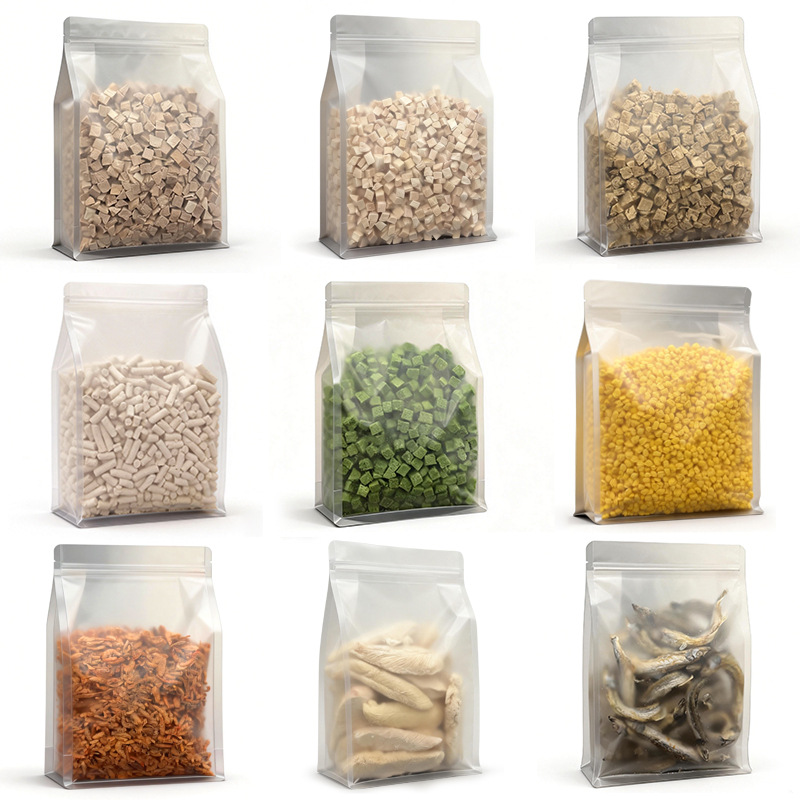
The natural pet food movement is no longer a niche trend — it is a fundamental shift in how pet owners think about nutrition. With the global natural pet food market projected to reach $200.25 billion by 2026, more consumers are scrutinizing ingredient labels and rejecting products laden with artificial additives, by-products, and fillers. SHANGHAI CREATRESS a manufacturer of organic natural pet snacks, explains why natural ingredients in pet treats deliver measurable health benefits — from improved digestion and reduced allergy symptoms to healthier skin and longer lifespans — and how to identify genuinely natural products in a market flooded with misleading claims.
In the pet food industry, the term "natural" can be ambiguous. Under AAFCO guidelines, a "natural" pet food ingredient is derived solely from plant, animal, or mined sources and has not been produced by or subjected to a chemically synthetic process — except for unavoidable processing required to make the ingredient safe or usable.
At Luohe Infinite, we define natural ingredients by four criteria:
Single-source origin
1. — traceable to a specific farm, fishery, or region
Minimal processing
2. — freeze-dried, air-dried, or gently baked; no extrusion at extreme temperatures
No synthetic additives
3. — zero artificial colors, flavors, preservatives, or palatants
Functional integrity
4. — the ingredient retains its naturally occurring vitamins, enzymes, and phytonutrients
1. Better Digestive Health
Natural pet snacks made from whole-food ingredients contain naturally occurring fiber and digestive enzymes absent in highly processed alternatives. Fiber from pumpkin, sweet potato, and psyllium husk supports gut motility and microbiome diversity. In contrast, synthetic fillers like corn gluten meal and cellulose powder provide bulk without nutritional value, often contributing to loose stools and inconsistent digestion.
2. Fewer Allergies and Food Sensitivities
Artificial colors (e.g., Red 40, Yellow 5) and synthetic preservatives (e.g., BHA, BHT, ethoxyquin) are among the most commonly reported triggers for pet food allergies. Natural ingredient snacks eliminate these irritants entirely, and single-protein options make it easy for owners to conduct elimination diets and identify specific protein sensitivities.
3. Healthier Skin and Shinier Coat
Ingredients like wild-caught salmon, Antarctic krill, and coconut oil provide bioavailable Omega-3 and Omega-6 fatty acids — essential for maintaining the skin barrier and producing a glossy coat. Unlike synthetic fatty acid supplements, whole-food sources also deliver cofactors (e.g., astaxanthin in krill) that enhance absorption and antioxidant protection.
4. Stronger Immune Function
Functional natural ingredients — turmeric (curcumin), blueberries (anthocyanins), green-lipped mussels (glycosaminoglycans) — deliver immune-modulating compounds in their whole-food matrix. Research indicates that pets consuming diets rich in natural antioxidants show lower systemic inflammation markers and improved vaccine response compared to those on synthetic-supplemented diets.
5. Cleaner Teeth and Fresher Breath
Natural chew-based snacks (freeze-dried poultry necks, rabbit ears, beef tendons) provide mechanical cleaning action that helps scrape plaque. Additionally, natural ingredients like parsley, mint, and coconut oil have mild antibacterial properties that combat halitosis — without the sugar alcohols and artificial breath fresheners found in many commercial dental treats.
6. Weight Management and Satiety
Whole-food snacks are naturally more satiating than calorie-dense, carbohydrate-heavy treats. High-protein, low-carb natural snacks help maintain lean muscle mass while supporting a healthy metabolism. A single-ingredient freeze-dried chicken treat, for example, delivers approximately 80% protein with under 5% fat — ideal for pets on weight-control programs.
Not all products labeled "natural" meet high standards. Here is a practical checklist:
|
Criterion |
What to Look For |
Red Flags |
|
Ingredient list |
Short (1–5 items), recognizable whole foods |
Long lists with chemical-sounding names |
|
Protein source |
Named species (e.g., "chicken breast") |
Vague terms (e.g., "meat meal," "animal derivatives") |
|
Preservatives |
Mixed tocopherols, rosemary extract |
BHA, BHT, ethoxyquin, sodium nitrite |
|
Certifications |
USDA Organic, EU Organic, BRC, ISO 22000 |
No third-party certification |
|
Processing method |
Freeze-dried, air-dried, gently baked |
Extruded at high temperature, deep-fried |
|
Traceability |
Batch-level origin disclosure |
No source information available |
SHANGHAI CREATRESS has pioneered a "Three-Zero" formulation standard for its premium cat treat line — zero artificial gums, zero starches, and zero chemical attractants. This standard was developed in response to growing consumer concern over carrageenan, modified starches, and synthetic palatants commonly found in extruded cat treats.
Each "Three-Zero" product undergoes:
This standard represents our commitment to transparent, verifiable ingredient quality — not just marketing claims.
Are natural pet snacks more expensive? On a per-unit basis, natural snacks often carry a higher price tag. However, because they are nutrient-dense and highly satiating, smaller serving sizes are effective. When calculated by cost-per-serving rather than cost-per-gram, natural options are often competitive with mid-tier commercial treats — without the hidden health costs of artificial additives.
How can I tell if "natural" on the label is genuine? Flip the package and read the ingredient list. If you cannot recognize or pronounce every ingredient, it is likely not truly natural. Also look for third-party certifications (USDA Organic, EU Organic, BRC) that require independent auditing.
Can natural snacks help my pet lose weight? Yes. High-protein, low-carbohydrate natural snacks promote satiety and lean muscle maintenance. Combined with portion control and regular exercise, they are an effective component of a weight management plan.
Are grain-free natural snacks better? Not necessarily — it depends on the individual pet. While some pets thrive on grain-free diets, whole grains like brown rice and oats can be healthy natural carbohydrate sources for pets without grain sensitivities. The key is that all ingredients, whether grain-inclusive or grain-free, should be whole-food and minimally processed.
What's the difference between "natural" and "organic" pet snacks? "Natural" means the ingredient is not chemically synthesized. "Organic" is a stricter certification that also governs how the ingredient is grown or raised (no synthetic pesticides, no GMOs, no antibiotics, no growth hormones, and specific animal welfare standards).


 EN
EN